
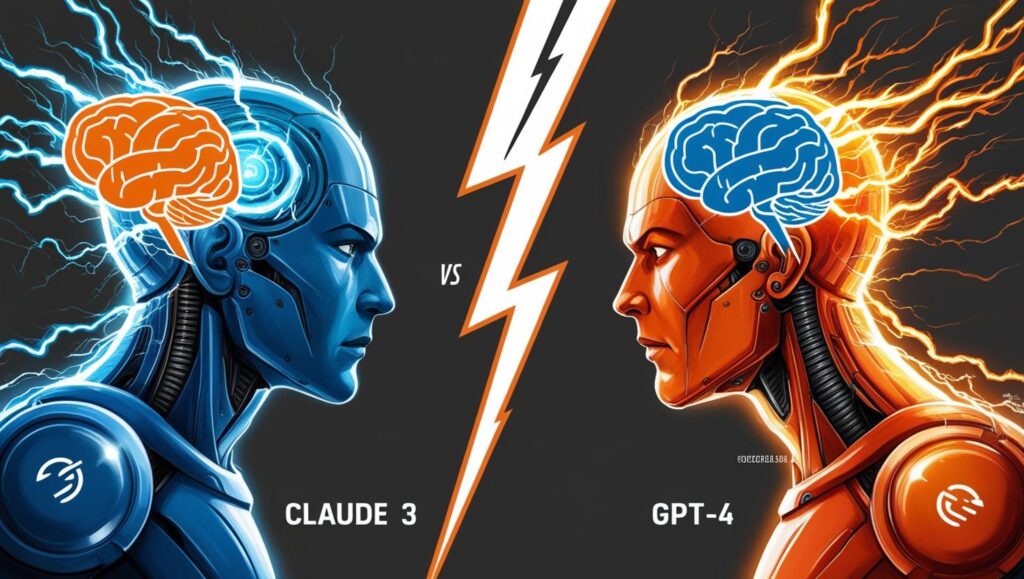
Last updated: July 2026. Claude and ChatGPT are close enough that most comparisons resort to benchmark tables nobody acts on. Two jobs actually separate them in daily use — long-document work and writing voice — so that’s what this compares. If you want the three-way including Gemini, see ChatGPT vs Gemini vs Claude.
A note on scores: both are listings on this site rather than tested reviews. We use both daily, but neither has been through our formal scoring process, so neither carries a rating. We’d rather leave the gap than invent a number.
Short answer
For writing — long-form, editing, anything where voice matters — Claude. For coding, it’s close, and the deciding factor is usually workflow rather than raw ability: ChatGPT if you want the wider ecosystem and code execution in the chat, Claude if you’re reading a large unfamiliar codebase.
Writing
Claude’s output needs less flattening. ChatGPT has a recognisable register — the tricolon, the tidy summary paragraph, the hedge — that you end up editing out. Claude drifts less from a voice you’ve established earlier in a conversation, which matters when you’re producing something long rather than one-off snippets.
The structural advantage is context. A whole manuscript, report or set of documents goes in as one piece, and Projects retain that across sessions. If your writing work involves holding a lot of material in view, that’s the difference.
Coding
Both are strong. Claude’s context window makes reading and refactoring an unfamiliar codebase noticeably easier — you can give it the surrounding files rather than a snippet, and the suggestions account for them. ChatGPT counters with code execution in the conversation and a much larger ecosystem of custom GPTs and integrations.
Neither is the right tool for coding inside your editor, which is a separate category — see AI coding assistants for that.
What each is better at, concretely
- Claude: long documents, sustained writing voice, reading large codebases, editable artifacts alongside the chat.
- ChatGPT: breadth of integrations, custom GPTs, image generation in the same place, running code, voice conversation, the largest third-party ecosystem.
Where both fail the same way
Both will produce confident, well-formatted, wrong answers — including citations and references that don’t exist. That behaviour hasn’t been engineered away and you should assume it on anything consequential. When the answer needs to be checkable, Perplexity cites its sources; when it must come only from your own material, NotebookLM is grounded in what you upload and nothing else.
Which should you pay for?
Both have free tiers, so run both for a fortnight before committing — it costs nothing and settles the question better than any comparison including this one. If you write for a living, our expectation is you’ll keep Claude. If you want one assistant that does the widest range of things, ChatGPT.
FAQs
Which is better for long documents?
Claude, clearly. It’s the single most practical difference between them.
Which writes more naturally?
Claude, in our use — ChatGPT has a house style you end up editing. That’s a judgement about register, not a benchmark result.
Why is there no score on this page?
Because we haven’t formally tested either. Scores on this site mean a structured evaluation we paid for; using a tool daily isn’t the same thing.
Can I use both free?
Yes. Both free tiers are usable, and the rate limits are the main thing you’ll hit.
Get the best AI tools in your inbox
One useful email a week — tool verdicts, honest picks, and copy-paste prompts. No spam, unsubscribe anytime.